Dial in Your Long Putts with These Expert Techniques
By Staff Writer
4 min read

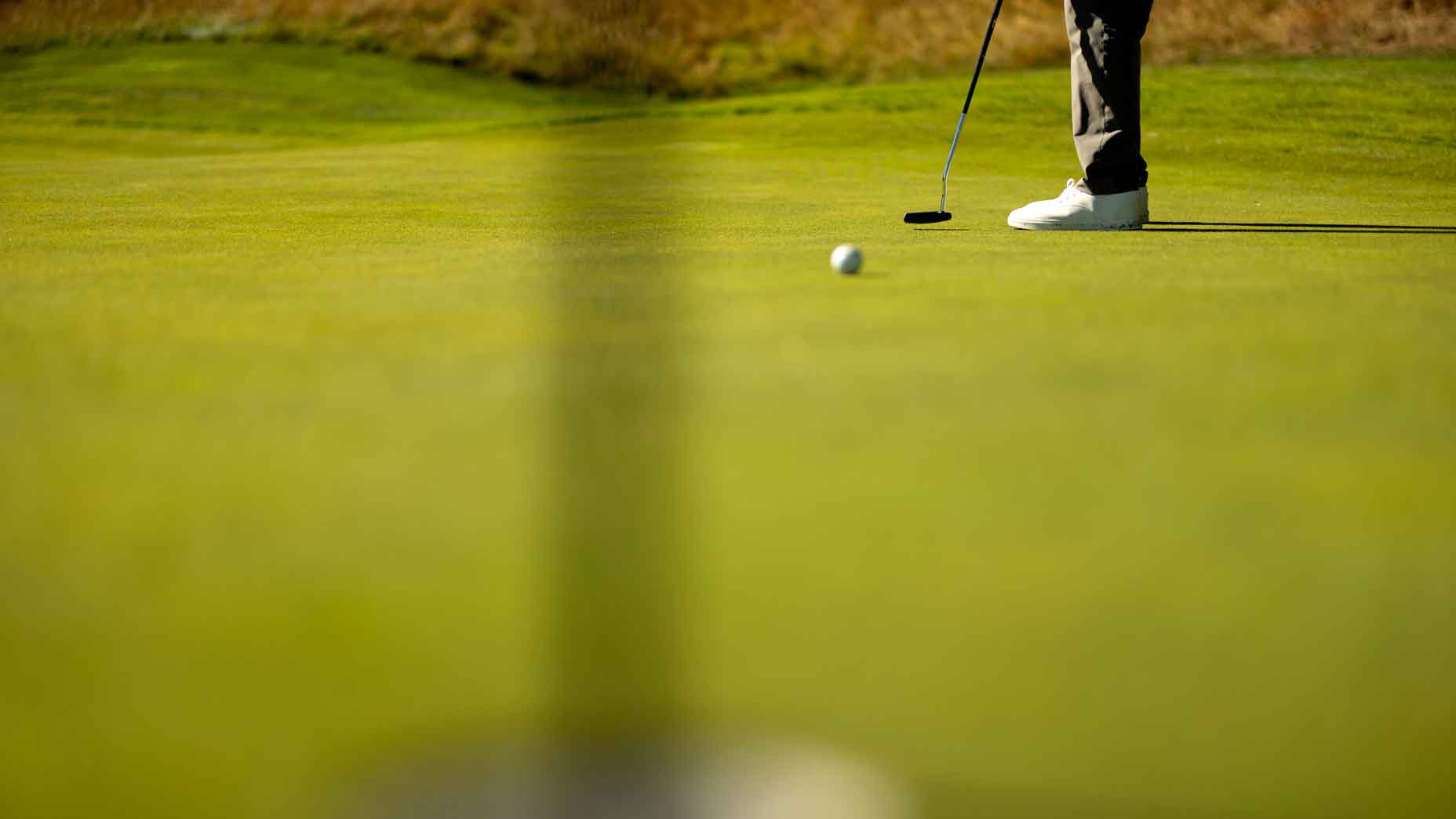
While no player enjoys hitting long-distance putts, having the ability to roll your shot across the green and close to the hole is a necessary skill if you’re looking to score better.
Sure, every putt can be daunting. But just because one is 30 feet as opposed to three feet shouldn’t make you feel more intimidated. If anything, it should give you an opportunity to be aggressive and leave it close.
So with the right technique and understanding of distance control, you can putt with confidence — and following our 10 tips for mastering long-distance putts is a good way to get there.
1. Solid Setup and Swing Motion
All good putters have good technique, which certainly includes a solid setup and swing motion. An important part of a good setup is having a shoulder line that sets up a proper shoulder path — since your shoulder path determines your stroke path. This is done by bending forward from the hip joint, allowing your arms to hang beneath your shoulders.
2. Limit Moving Parts
Controlling distance is all about dialing in your accuracy. So by limiting moving parts, you can make it easier to consistently roll the ball to your desired distance. Hands, arms, and shoulders create the stroke and relative speed, so you’ll want to limit other body parts from moving. This means keeping both your head and lower body still.
3. The Size of Your Backstroke Matters
The size of your backstroke is what controls your distance; and good putters understand this. Since smaller strokes swing slower, they deliver less speed and distance, whereas longer strokes fall faster and deliver more speed at impact to roll the ball farther. It isn’t about hitting the ball harder or softer, but making the stroke longer or shorter. If you’re not used to taking larger strokes, it can feel a bit odd at first. But if your backstroke is large enough, you don’t need to add false speed to get the ball to your target, since a bigger backstroke is much more reliable and consistent.
4. Center-Face Contact
Everyone knows making center-face contact with the full swing is important, but it’s just as critical when putting! Center-face contact is relative to setup, staying stable, and having a good stroke path. Off-center hits will cause the face to twist, and these unstable faces won’t roll the ball as far. A good practice drill for making center-face contact is hitting a ball between two tees. If your ball hits either tee, you’re not hitting in the center of your putter. Another good option is a training aid, with a putting mirror being a good way to practice contact and roll.
5. Avoid Deceleration
Thinking that you need to accelerate on your putts is a myth. When you come up short on your longer putts, it’s highly likely that your stroke wasn’t large enough or you didn’t make center-faced contact — not because you decelerated prior to making impact. Yes, it’s important to read the break on longer putts, but you shouldn’t spend an exorbitant amount of time doing so. That’s because your distance control is the top priority. Understanding the general curve is important, but the focus should remain on distance control.
6. Practice the Full Stroke
When you take a larger stroke, your putter will naturally elevate upwards. If you think that a putting stroke should always stay low to the ground, this can inhibit your ability to make a large enough stroke. To get really good at distance control on longer putts, practice putting from end-to-end during practice. Another way to practice is by putting to points from off the green. This is helpful for when you’re in this situation on the golf course and need to use a Texas wedge.
7. Calibrate with Steps
Many amateurs struggle with distance control, so don’t be hard on yourself if it continues to be a problem for you on the greens. A good rule to follow to help dial in this part of your game is calibrating your putts with your steps. For instance, one large step is approximately three feet, so this needs one inch of your backstroke. As you walk by the hole, take large steps and count. If your putt is 10 large steps, then your backstroke length would need to be approximately 10 inches. You would then need to factor in any uphill or downhill slopes. You may also need to add inches if greens are particularly slow, or subtract if they’re playing fast. This can be a great system to better understand how to control distance and roll your longer putts closer to the cup.
8. Frequently Asked Questions
Q: What is the recommended size for a backstroke on long-distance putts?
A: The size of your backstroke should be longer for longer putts to deliver more speed and distance at impact.
Q: How can I practice center-face contact?
You can practice center-face contact by hitting a ball between two tees or using a putting mirror as a training aid.
Should I accelerate on my putts?
No, it is a myth that you need to accelerate on your putts. Focus on making a consistent stroke length for distance control instead.
How can I improve my distance control on longer putts?
A: Practice putting from end-to-end to get a feel for distance control. Additionally, you can practice putting to specific points from off the green, simulating real on-course situations.
How can I calibrate my putts with my steps?
Use your steps as a guide for backstroke length. For example, one large step is approximately three feet, so adjust your backstroke length accordingly based on the desired distance.
Improve your long-distance putting with these tips and watch your scores lower as you become a sniper on the greens.