Five Common Driver Distance Myths That Are Costing You Yards
By Staff Writer
3 min read

Key takeaways
- A shorter, well-timed backswing often outdrives a longer one that costs a golfer balance and timing.
- Fixing the head in place can restrict the shoulder turn and rotation that create clubhead speed.
- A stronger grip can help square the clubface but does not by itself add speed, and can close the face too much.
- Swinging as hard as possible tends to add tension that cancels out any speed gained.
- A rigidly straight lead arm matters less than a balanced, repeatable swing.
Golf coaches say several of the most common tips amateurs trade with each other on the range and the first tee — swing harder, keep your head down, strengthen your grip — do little to add distance off the tee, and can cost golfers clubhead speed rather than add it.
Does a longer backswing create more power?
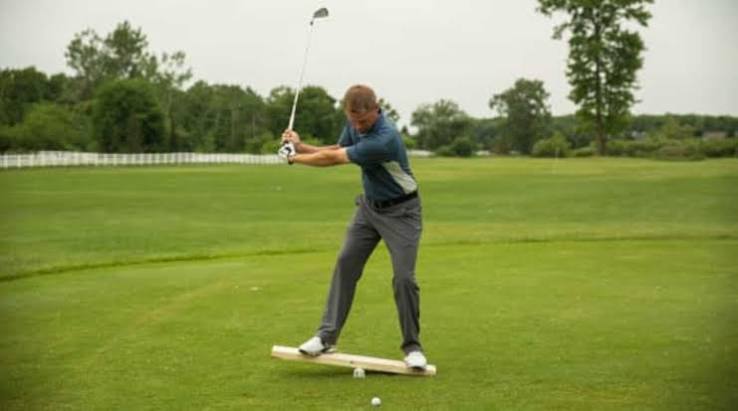
Stretching the backswing beyond a golfer's natural mobility is a common way players try to find extra yards. Coaches say it usually backfires: a backswing that exceeds what a golfer's body can control leads to lost balance and timing, which shows up as inconsistent strikes rather than longer drives. A shorter backswing that a golfer can repeat on every swing tends to produce more usable speed than a longer, off-balance one.
Should golfers try to keep their head completely still?
Keeping the head rigidly fixed through the swing is one of the oldest pieces of golf advice, but instructors say it is rarely the real cause of a player's problems. Locking the head in place restricts the shoulder turn and body rotation that generate clubhead speed. The head naturally moves as the shoulders turn and the body rotates through impact; the better focus, coaches say, is maintaining posture and turning freely rather than holding the head still.
Does a stronger grip add clubhead speed?
A stronger grip — where three or more knuckles are visible on the top hand, with the lower hand sitting further underneath the club — can make it easier for some golfers to square the clubface at impact. It does not, on its own, create more clubhead speed, and an overly strong grip can lead to a closed face and shots that miss left. Coaches generally recommend choosing a grip that fits a golfer's hand size and strength rather than adopting a stronger grip by default; some instructors have moved golfers who were taught an interlocking grip early on to a more neutral, ten-finger grip to reduce tension in the hands.
Is maximum effort the fastest way to more yards?
Swinging as hard as possible is a natural instinct when a golfer wants extra distance, but coaches say the added effort usually brings tension that works against speed, along with a loss of balance. Clubhead speed is treated by instructors as a trainable skill rather than a fixed trait, built through an athletic, balanced swing rather than brute force.
Balance and timing tend to produce more clubhead speed than brute effort ever will.
The same logic applies to the lead arm. Many golfers have been told to keep it perfectly straight throughout the backswing, but coaches say a small amount of bend is preferable to a locked, rigid elbow if it keeps the swing relaxed and repeatable. A golfer does not need to rebuild a swing from scratch to find more distance — the bigger gains, instructors say, usually come from removing tension and building a swing that can be repeated under pressure, changing one element at a time rather than several at once.
Frequently asked questions
What is the biggest myth about driving for more distance?
Many golfers assume a longer backswing automatically adds power. Coaches say a backswing that exceeds a golfer's mobility usually causes a loss of balance and timing, which reduces distance rather than adding it.
Does keeping your head down help you hit the ball farther?
No. Fixing the head in place restricts the shoulder turn and body rotation that create clubhead speed. The head should move naturally as the shoulders turn.
Will a stronger grip make my drives longer?
A stronger grip can help some golfers square the clubface, but it does not by itself increase clubhead speed, and it can lead to a closed clubface at impact.
Is swinging as hard as possible the key to more swing speed?
No. Coaches say maximum effort tends to create tension that slows the club down and disrupts balance. Speed is better built through an athletic, repeatable swing.
Does my left arm need to stay completely straight in the backswing?
Not rigidly. A small amount of bend in the lead arm is fine if it keeps the swing relaxed; locking the elbow can add tension and restrict the swing.
- driver distance
- golf swing myths
- driving tips
- golf instruction
- swing speed
- golf grip