Why Teaching Pros Use a Simple Tee for Ball-Striking Drills
By Staff Writer
2 min read

Golf instructor Kellie Stenzel says a plain golf tee, not just a driver accessory, is one of the most useful feedback tools in a practice session — and that treating it as a penalty for newer golfers gets the tool backward.
Key takeaways
- Teeing the ball for iron shots gives golfers feedback on where the club is contacting the ground.
- A two-tee drill — one under the ball, one just ahead of it — trains a proper divot after impact, not before.
- A forward tee laid flat on the target side helps golfers who scoop or top the ball find the right low point.
- A tee pass-through drill, with a tee on each side of the ball, trains center-face contact and flags heel or toe strikes.
Why use a tee to warm up?
Starting a practice session with a low tee lets a golfer work on the swing without worrying about hitting the ball and the ground at the same time, Stenzel says. With any club besides a driver, the tee should get clipped or broken if the swing has enough speed behind it, which builds confidence early in a session.
What fault does a tee correct?
Stenzel says many golfers instinctively try to scoop or lift the ball off the turf instead of trusting the club to get down to the ground on its own. Placing the ball on a tee — or practicing with just a tee and no ball — gives immediate feedback on whether the swing is reaching the correct low point.
How does a tee teach a proper divot?
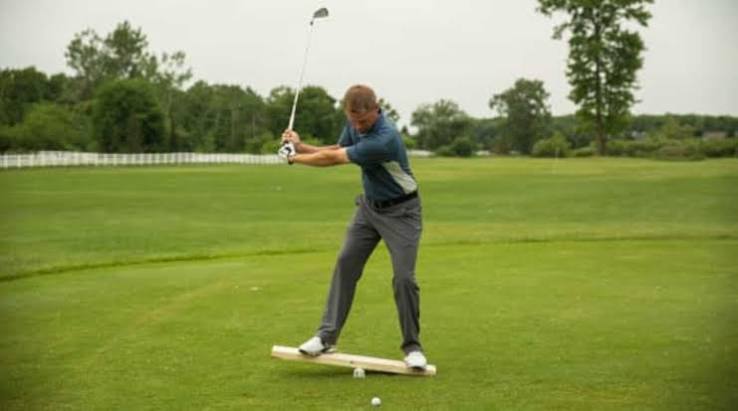
For golfers who need to learn where the low point of the swing should be, Stenzel recommends a two-tee drill: ball on a tee, with a second tee stuck partway into the ground just beyond it, toward the target. A swing with the right low point scrapes both tees out of the ground after the ball, not before it. A single flat tee on the target side works as a simpler version of the same drill, training the club to stay low and scrape through rather than stop at impact.
A golfer who tops the ball may still move the tee — that isn't the feedback the drill is looking for.
How can a tee fix heel or toe strikes?
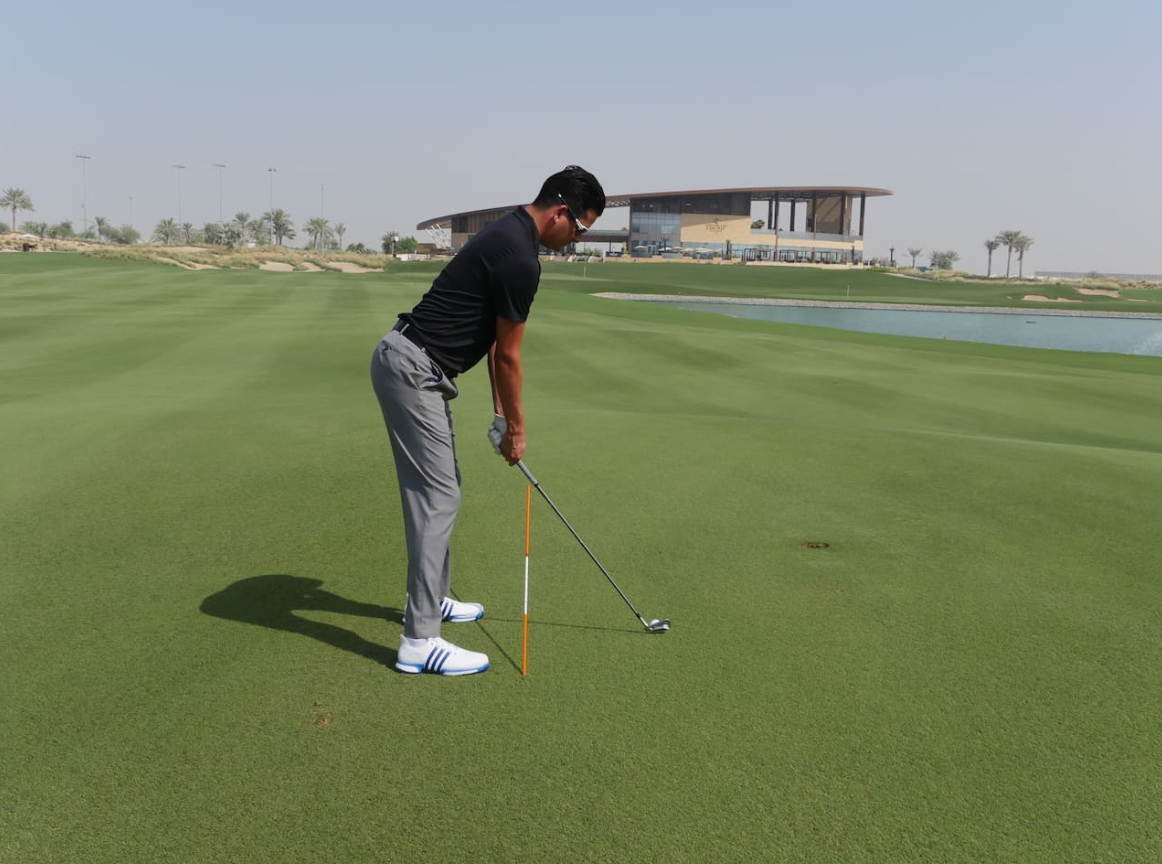
For center-face contact, Stenzel suggests a tee pass-through drill: ball on a tee, with a tee stuck in the ground on each side of it, spaced just wide enough for the clubhead to fit through. A stance that is too close to the ball tends to catch the outside tee, a heel-strike sign; a stance that is too far away tends to catch the inside tee, a toe-strike sign.
Frequently asked questions
Is it bad to hit off a tee during iron practice?
No. Stenzel says a tee is a feedback tool, not a penalty, and even advanced players use it to check swing fundamentals.
What is the tee pass-through drill?
It places a tee on each side of the ball, narrow enough for only the clubhead to pass through, to train center-face contact and flag heel or toe strikes.
How do I know if my low point is correct?
In the two-tee drill, a correct low point scrapes both tees out of the ground after the ball is struck, not before.
- kellie stenzel
- golf instruction
- ball striking drills
- practice tips
- divot pattern
- golf training aids