The Reptilian Threat: Burmese Pythons Take Over Florida
By Staff Writer
5 min read
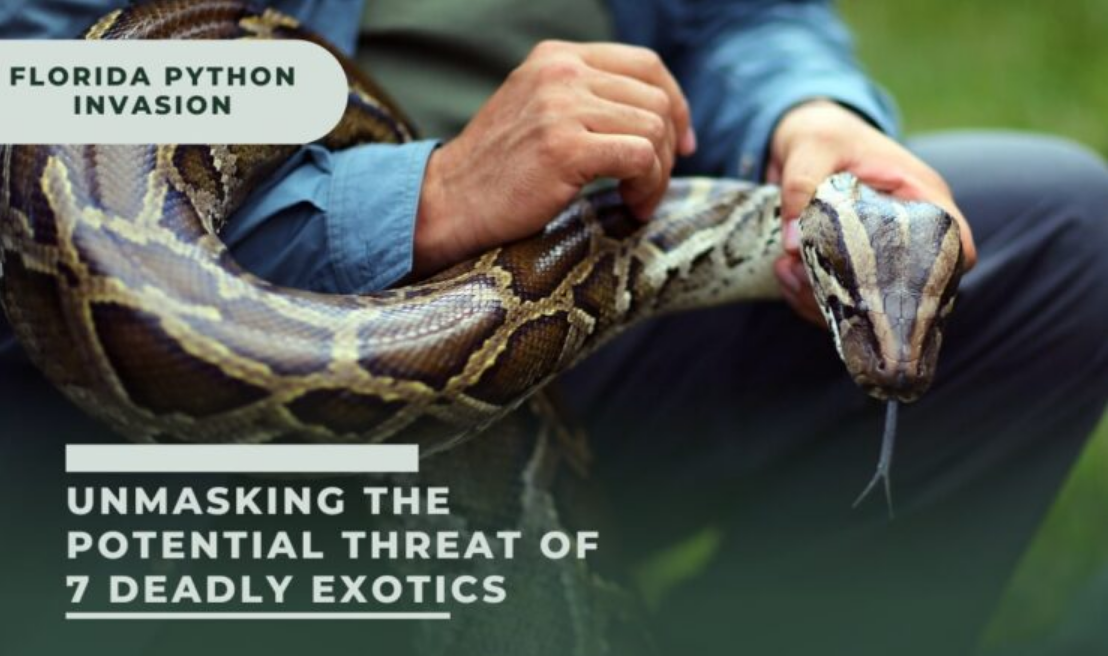
Burmese pythons, a non-venomous species native to Southeast Asia, have become a pressing issue in Florida, particularly in the Everglades and surrounding areas. These invasive snakes have been steadily expanding their territory to the north, posing a threat to native wildlife and ecosystems. In this article, we will delve into the details of this growing problem, discussing the efforts to manage and control these pythons and their impact on the region.
The Lengthy Encounter: A Python at Hideaway Beach Club
Recently, officers from the Marco Island police department found themselves faced with a daunting task – removing a Burmese python from the bushes near a residence at the Hideaway Beach Club. The officers, alongside a club security guard, skillfully wrangled the 9-foot snake using golf clubs. Expertly placing a cloth over the snake’s head, they safely transferred it into a carrier. This incident sheds light on the urgency of addressing the python invasion and highlights the need for effective management strategies.
On Record: The Longest Captured Burmese Python
One may wonder just how big these pythons can get. In July, near Naples, a record-breaking discovery was made in the Big Cypress National Preserve. Measured by the Conservancy of Southwest Florida, a massive Burmese python, stretching an impressive 19 feet, was recorded. Such findings emphasize the formidable size these snakes can reach, further emphasizing the need for proactive intervention to protect the delicate balance of Florida’s ecosystem.
Python Removal: Regulations and Guidelines
To combat the Burmese python problem, regulatory measures have been established. Permit holders, python removal contractors, and officials from the Florida Fish and Wildlife Conservation Commission (FWC) and South Florida Water Management District are permitted to transport live pythons for euthanization. However, for the general public, humane killing methods must be employed at the capture location, adhering to anti-cruelty laws. Shooting is considered acceptable if it aligns with state and local firearms regulations, ensuring the immediate loss of consciousness. Special care must be taken to destroy the animal’s brain to prevent any possibility of regaining consciousness.
The Origins of the Invasion: How Burmese Pythons Arrived in Florida
The presence of Burmese pythons in Florida can be attributed to the exotic pet trade. Interestingly, many invasive snakes found in the state were initially released intentionally or accidentally after being kept as pets. A thriving population of these non-native snakes now occupies various regions of South Florida, posing a significant challenge to local species and ecosystems.
Venomous or Not? Understanding Burmese Python’s Nature
While fearsome in appearance, it is essential to understand that Burmese pythons are not venomous. Their modus operandi involves constriction, as they squeeze their prey before consuming it. It is important to note that there have been no reports of human fatalities due to encounters with Burmese pythons in the wild in Florida. However, their impact on the local fauna and flora cannot be overlooked.
Devastating Consequences: The Impact on Florida’s Ecosystems
The presence of Burmese pythons has had severe consequences for native species and the delicate balance of Florida’s ecosystems. These pythons have proven to be highly adaptable predators, feeding on a wide range of wildlife, including small mammals, birds, reptiles, and even alligators. As a result, native populations have been significantly impacted, leading to disruptions in the food chain and broader ecological imbalances. The challenge of managing and controlling these invasive species has become a global issue, requiring swift and effective action.
Florida Python Challenge: A Collective Effort for Removal
In response to the growing python invasion, the Florida Fish and Wildlife Conservation Commission organizes an annual event – the Florida Python Challenge. This ten-day competition mobilizes participants to remove Burmese pythons from South Florida’s ecosystem. The event offers various categories and provides monetary prizes to successful participants. In the most recent challenge, held in 2023, 1,050 participants emerged to remove an astounding total of 209 Burmese pythons.
Edible Delicacy or Mercury Hazard: Python Meat and Eggs
While the removal of these invasive snakes remains a priority, there has been some discussion around the utilization of python meat and eggs. According to the FWC, python meat and skin can be kept and sold. Remarkably, samples taken from pythons removed from the Everglades contained high levels of mercury. As a neurotoxin, mercury can have detrimental effects on brain function and reproductive systems. While consuming python meat is not illegal, caution is advised, as neither the Florida Department of Health nor the Florida Department of Agriculture has declared it completely safe for consumption.
The Ongoing Battle: Persistence is Key
Experts continue to address the Burmese python issue in Florida with determination and dedication. As reports of their expansion and increased size circulate, it is evident that urgent action is required. These non-native snakes pose a significant threat to the state’s delicate ecosystems, necessitating strong and consistent efforts to manage their population. Through ongoing initiatives like the Florida Python Challenge, alongside preventive measures and proactive legislation, Florida can strive to regain balance and protect its native species and habitats.
_____________________
Frequently Asked Questions (FAQs):
What is the longest Burmese python ever captured?
The longest Burmese python ever measured was a massive 19 feet. It was discovered in the Big Cypress National Preserve near Naples and recorded by the Conservancy of Southwest Florida in July.
What do you do if you catch a Burmese python in Florida?
Permit holders, python removal contractors, and authorized personnel can transport live pythons for euthanization. However, everyone else must humanely kill the pythons at the capture location, adhering to anti-cruelty laws.
How did the Burmese python get to Florida?
Burmese pythons were introduced to Florida through the exotic pet trade. Many of these snakes, intentionally or accidentally released, have adapted and established populations in South Florida.
Are Burmese pythons venomous?
No, Burmese pythons are non-venomous. They rely on constriction to subdue and consume their prey.
Are Burmese pythons still a problem in Florida, particularly the Everglades?
Yes, Burmese pythons are a significant problem in Florida, especially in the Everglades region. They have impacted native species and ecosystems extensively, making them one of the most challenging invasive species management issues worldwide.
What is the Florida Python Challenge?
The Florida Python Challenge is an annual event organized by the Florida Fish and Wildlife Conservation Commission to tackle the Burmese python invasion. Participants aim to remove these invasive predators from South Florida and are eligible to win monetary prizes.
Is python meat edible? Do people eat Burmese python eggs?
While python meat and skin can be kept and sold, caution is advised due to the presence of high mercury levels. Python eggs, similarly, can be consumed; however, the safety of eating python meat and eggs remains a subject of discussion, as no official declarations have been made by the Florida Department of Health or the Florida Department of Agriculture.
- Burmese Pythons
- Ecosystems
- Exotic Pet Trade
- Florida
- Florida Python Challenge
- Humane Killing
- Invasive Species
- Mercury Hazard
- Non-Venomous
- Python Eggs
- Python Meat
- Python Removal
- Regulatory Measures


